
Retirement Hobbies: Why Is Pickleball So Popular?
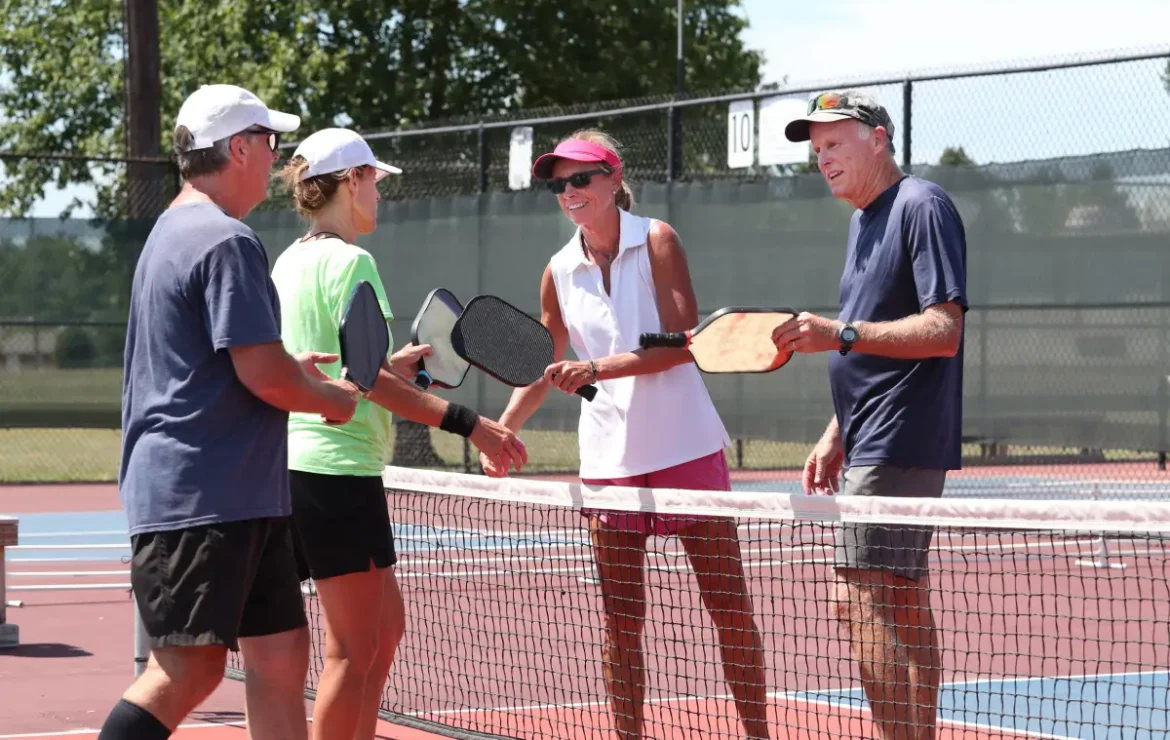
You may remember names like Andre Agassi, Andy Roddick, Steffi Graf, John McEnroe, and Maria Sharapova. What you might not realize is that they are all pickleball champions now.
Their days at Wimbledon may be behind them, but they picked up retirement hobbies, including one of the fastest-growing sports in the country, and they have plenty of company.
Pickleball has exploded in popularity, with growth of 311% in recent years and an estimated 19.8 million to 48.3 million players across the United States, according to Pickleheads.
While older adults helped put the sport on the map, millennials are now driving much of its growth. Still, adults 65 and older make up 15.4% of all players, and for good reason.
What is pickleball, and where did it come from
The definition of pickleball is a paddle sport played with a lightweight plastic ball on a court roughly the size of a badminton court, with a net set at 34 inches. It borrows elements from tennis, badminton, and ping pong, and can be played as singles or doubles.
The sport was invented in 1965 on Bainbridge Island, Washington, by three fathers looking for something to keep their kids occupied during the summer. They used whatever equipment they had on hand, improvised the rules, and created something that would eventually become one of the most participated-in sports in the country. Not bad for a backyard experiment.
Why pickleball works so well as a retirement hobby
Retirement hobbies tend to stick when they offer a combination of physical engagement, social connection, and enough challenge to stay interesting. Pickleball delivers all three in a format that does not require elite athleticism or expensive equipment:
- The smaller court size means less ground to cover than in tennis
- The lightweight paddle and ball reduce strain on joints
- The rules take minutes to learn
- The social culture around the sport is genuinely welcoming
- New players are rarely left standing on the sidelines for long
The physical benefits are real, too. Regular play supports cardiovascular health, balance, hand-eye coordination, and lower-body strength, all of which are important for healthy aging.
If pickleball is not your thing
Not everyone wants to chase a plastic ball around a court, and that is perfectly reasonable. The good news is that the same benefits of pickleball, including movement, social interaction, mental engagement, and a sense of routine, are available through a wide range of other retirement hobbies.
Some options worth exploring include:
- Gardening, which combines light physical activity with a creative and meditative outlet
- Painting or drawing, which supports fine motor skills and provides a meaningful way to spend time independently or in a group
- Playing or learning a musical instrument, which challenges the brain in ways that support long-term cognitive health
- Book clubs or discussion groups, which provide regular socialization and intellectual stimulation
- Swimming or water aerobics, which offer full-body movement with minimal joint impact
- Woodworking or crafting, which engages problem-solving and manual skills in a satisfying, hands-on way
- Video gaming, which has grown significantly among older adults and offers surprising benefits for reaction time, problem-solving, and brain health, along with access to online communities that keep players socially connected from anywhere
The common thread across all of these is consistency. A retirement hobby that happens regularly does more for overall well-being than an ambitious one that fades after a few weeks.
Pickleball in retirement
Florida is the undisputed capital of pickleball in the United States, with 1,228 courts and more dedicated playing space than any other state in the country. For older adults who love the game, it is hard to imagine a better place to be.
Sodalis Living communities across Texas, Georgia, and Florida are designed to support the kind of daily life that makes retirement hobbies actually happen. When meals, transportation, and household responsibilities are handled, residents have more time and energy to get out to their favorite pickleball courts, try a new class, or simply build the routine they never had room for before.
Our assisted living and memory care communities remove the friction that makes staying active difficult, and in its place is a schedule that belongs entirely to the resident.
Frequently asked questions about pickleball and retirement hobbies
Pickleball is a paddle sport played on a small court with a lightweight plastic ball and a 34-inch net. It combines elements of tennis, badminton, and ping pong and can be played as singles or doubles. Most beginners pick up the basics within one or two sessions.
The smaller court, lighter equipment, and sport’s low-impact nature make it accessible to a wide range of fitness levels. The social culture around the game also makes it easy to meet other players and build a regular routine.
Gardening, painting, music, swimming, book clubs, gaming, and woodworking all offer comparable benefits in terms of physical activity, mental engagement, and social connection. The best hobby is whichever one a person will actually keep doing.
Communities with dedicated activity programming, on-site amenities, and social events make it far easier for residents to build consistent routines around the hobbies and activities they enjoy most.
The bigger pickle
Retirement hobbies are not just a way to fill time. They are one of the most effective tools available for maintaining physical health, cognitive function, and social connection as people age.
Whether that looks like pickleball in retirement or a quiet afternoon in the garden, what matters most is that the activity is consistent, enjoyable, and, when possible, shared with others.
The sport that started as a backyard improvisation has become a cultural phenomenon for a reason. It turns out people just needed something worth showing up for.
Active and Engaged Senior Living at Sodalis Living
Sodalis Living provides assisted living, memory care, and respite care in communities where daily programming, social events, and welcoming team members make it easy to build a routine worth looking forward to. Contact us to schedule a tour.