
Extending Well-Being: Cleaning Tools for Seniors
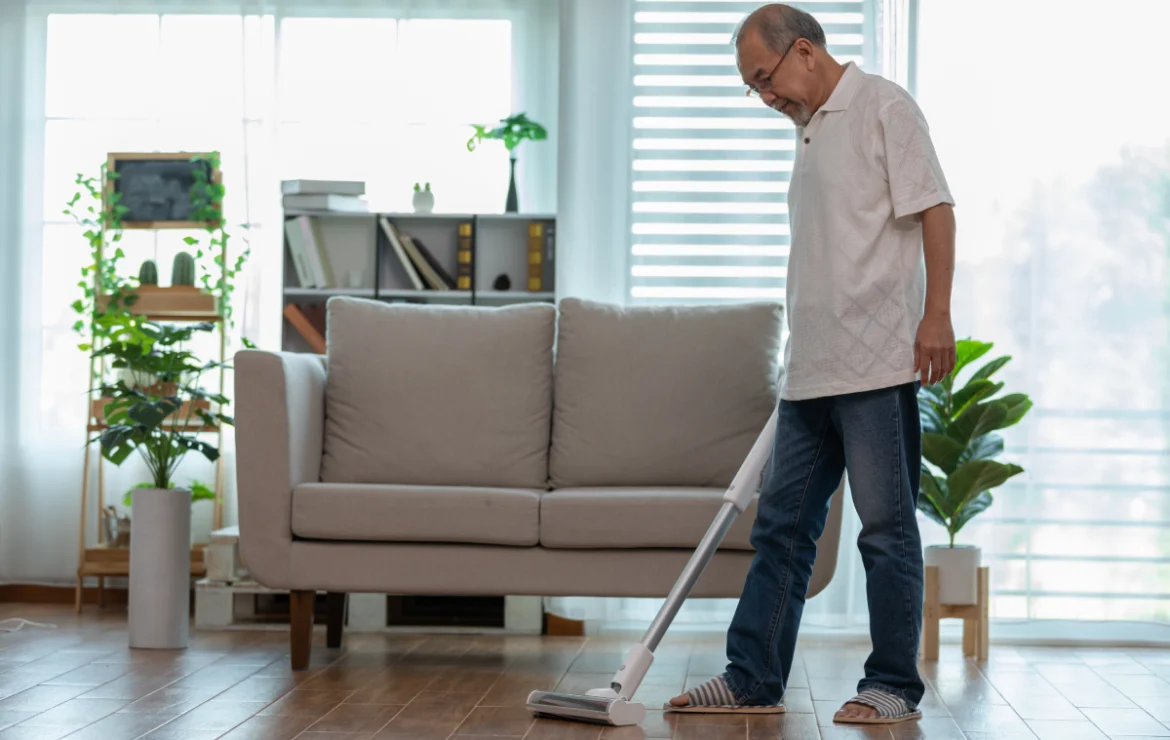
Two categories of daily tasks form the foundation of independent living. Activities of daily living, known as ADLs, cover the basics of personal care:
- Bathing
- Dressing
- Eating
- Mobility
Instrumental activities of daily living, or IADLs, cover the broader tasks that keep a household running:
- Managing medications
- Handling finances
- Preparing meals
- Keeping a home clean
Older adults often begin noticing difficulty with IADLs before ADLs. And among those IADLs, household cleaning is often one of the first to become a genuine challenge.
There is real dignity in a clean home.
For many older adults, maintaining independence is directly tied to a sense of capability and self-sufficiency. Even those who would happily hand off the vacuuming in a heartbeat can feel the sting of no longer being able to do it themselves.
That feeling is worth taking seriously.
Why cleaning becomes harder with age
The physical demands of household cleaning are easy to underestimate until the body starts making them known. Arthritis is one of the most significant contributors.
One in four older Americans has arthritis, and the numbers become more pointed when looking specifically at functional limitations. More than 54% of older adults with ADL limitations have arthritis, and nearly 56% of those with IADL limitations do as well.
Beyond arthritis, cleaning involves movements that carry real risk for older adults.
Research shows that 29% of all falls among older adults occurred while people were engaged in everyday activities, including cleaning, opening doors, and similar household tasks.
Step ladders compound that risk further. Sixty-one percent of older adults use step ladders monthly, mostly inside the home, with 70% of those uses involving tasks like changing a lightbulb.
These are not small concerns. They are reasons to think carefully about which tasks are still manageable and which ones call for a better approach.
What adaptive cleaning tools actually do
Adaptive cleaning tools and supplies are designed to reduce the physical demand of household tasks without requiring someone to give them up entirely. The right tools can lower strain on joints, reduce the need for bending and reaching, and make it possible to maintain a home without the risk of pushing through discomfort.
A few categories worth knowing:
- Lightweight vacuums and cordless models that reduce the weight and maneuvering required for floor cleaning
- Robotic vacuum cleaners that handle daily floor maintenance automatically with minimal physical involvement
- Extendable and telescoping dusters that eliminate the need for step ladders when cleaning ceiling fans, high shelves, and upper corners
- Ergonomic cleaning handles designed to reduce grip pressure and wrist strain for people with arthritis or reduced hand strength
- Long-handled scrubbers and mops that allow bathroom and floor cleaning without significant bending or kneeling
- Spray mops that combine a cleaning solution and a mop head in a single lightweight tool, removing the need to wring out a traditional mop
Building an adaptive cleaning supply kit
For older adults who want to continue managing their households, assembling the right set of adaptive cleaning supplies can make a meaningful difference. A practical starter kit might include:
- A cordless stick vacuum under 5 pounds for daily floor maintenance
- A robotic vacuum set on a daily schedule to handle the ongoing work between deeper cleans
- A telescoping duster with a flexible head that reaches high and low without climbing
- Ergonomic grip attachments for existing cleaning tools to reduce hand and wrist fatigue
- A spray mop with a removable, washable pad for hard floor cleaning
- Trigger-free or pump spray bottles that require less hand strength to operate
- Microfiber cloths, which clean effectively with less pressure than traditional cloths, and reduce the amount of product needed per surface
When selecting adaptive accessories, weight and handle design matter most. A tool that is technically functional but requires significant grip strength or awkward positioning defeats the purpose.
When the tools are not enough
Adaptive cleaning tools extend independence, but they do not eliminate the underlying physical reality of maintaining a home. For older adults managing more significant mobility limitations, arthritis, or fatigue, even the most thoughtfully designed tools can become burdensome over time.
That is a reasonable point at which to reconsider the arrangement entirely, not as a defeat, but as a practical decision about where energy is better spent.
Cleaning, independence, and life at Sodalis Living
At Sodalis assisted living and memory care communities, housekeeping is handled. That single change removes a category of physical risk, ongoing effort, and quiet worry from a resident’s daily life entirely.
What families notice is not that their loved one has given something up. It is that their loved one has more energy for everything else. A resident who spent Saturday mornings pushing through floor cleaning now spends that time doing something they actually chose.
The independence is still there. It has simply been redirected toward the parts of life that matter more.
Personalized care at Sodalis Living means that team members are attentive to how each resident spends their time and what they still want to manage on their own terms. Keeping a personal space tidy, arranging belongings, and maintaining the small rituals that make a home feel like one are things residents continue to own.
A move to senior living means the burden of the larger tasks disappears without taking any of that with it.
Frequently asked questions about cleaning tools for seniors
Ergonomic grip handles, trigger-free spray bottles, and lightweight cordless vacuums are among the most practical adaptive cleaning supplies for older adults managing arthritis. Reducing grip pressure and eliminating awkward reaching positions make the biggest difference.
Yes. Robotic vacuums are among the most effective home cleaning tools for reducing the daily physical demands of floor maintenance. Most models can be set on a schedule and require very little hands-on involvement.
Adaptive cleaning tools allow older adults to continue managing household tasks with less physical strain, reducing fall risk and joint stress while preserving a sense of capability and control over their living space.
When cleaning consistently causes pain, fatigue, or risk of falling, it is a reasonable time to evaluate whether adaptive tools are sufficient or whether a maintenance-free living arrangement better serves overall well-being.
What to keep in mind
Cleaning tools for older adults are a practical bridge between where someone is and where they want to stay. For those managing well at home with the right adaptive accessories, these tools extend independence in a real and meaningful way. For those approaching the limit of what is manageable, they offer a clear picture of how much effort maintaining a home actually requires, and what life might look like without it.
Maintenance-free living at Sodalis Living
Sodalis Living provides assisted living, memory care, and respite care in communities across the South, where housekeeping is handled so residents can focus on what matters most.
Contact us to schedule a tour.